Visits by appointment only - please call 07976 531152 to arrange.

The Fascinating Journey of Egg Formation in Hens
2 min read
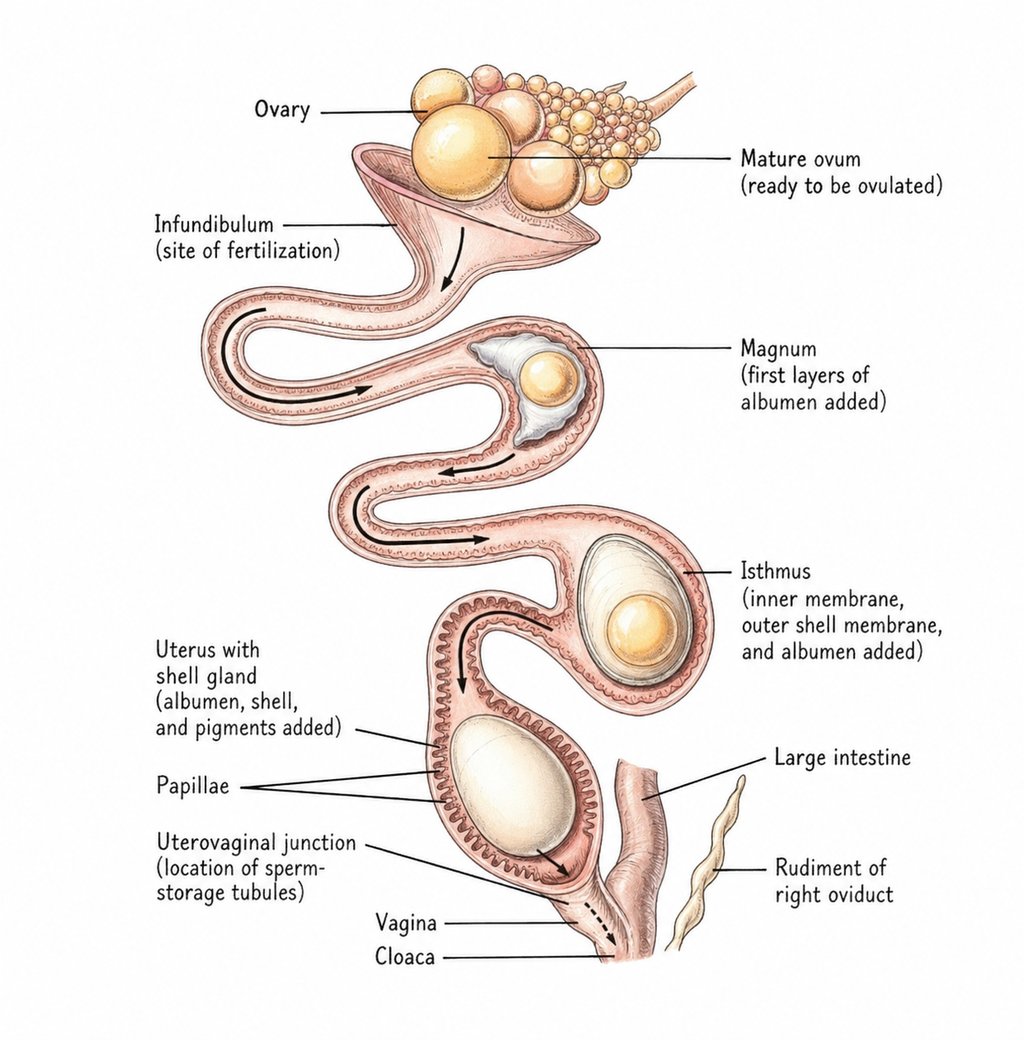
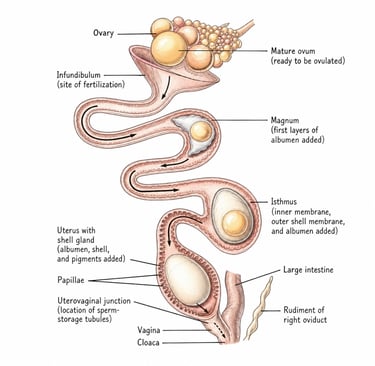
The Anatomy of a Hen: Understanding the Egg-making Machinery
To comprehend the intricate process of egg formation, one must first understand the anatomy of a hen, especially the components of its reproductive system. The journey of egg production begins in the ovaries, where ova, or yolks, are developed. Hens typically possess approximately 4,000 to 5,000 immature ova at birth, but generally, only around 400 to 500 of these will mature into eggs in a hen’s lifetime.
Once a yolk matures, it is released from the ovary and captured by the infundibulum, the initial segment of the oviduct. The infundibulum is crucial, as it is here that fertilization occurs if sperm is present. The yolk remains in this section for about 15 minutes before passing through to the next segment.
The magnum follows the infundibulum and is responsible for adding the egg white or albumen. This process takes approximately three hours. The albumen serves to protect the yolk and provide it with essential nutrients. After the magnum, the egg enters the isthmus, a narrower region of the oviduct, where the formation of the shell membranes takes place. This segment functions for roughly 1.5 hours, creating two layers of membranes that surround the egg.
Subsequently, the egg transitions to the shell gland, also known as the uterus. Here, the hard shell is deposited, comprising primarily calcium carbonate. This crucial phase can last up to 20 hours, providing the egg with protective characteristics before it is laid. Once the egg has completed its formation, the hen is prepared to lay the egg, and the cycle recommences with new yolk maturation.
What Happens When the Egg is Laid
The process of egg-laying in hens marks the culmination of a complex biological journey that takes place within the hen’s body. Upon reaching the final stage of this journey, a hen typically exhibits several observable physical signs. Most notably, hens may become restless, vocalize more frequently, and adopt specific postures as they prepare to lay an egg. These behavioral changes signal that the laying process is imminent.
During the laying process, a hen's body undergoes considerable stress as the egg is expelled from the oviduct. This phase can last anywhere from a few minutes to more than an hour, depending on individual circumstances. As the egg exits, it is enveloped in a thin protective layer called the bloom, which helps preserve the egg’s freshness. This layer plays a significant role in preventing bacteria from entering the egg while also regulating moisture loss.
Once the egg is laid, the physical implications for the hen are notable. The hen may experience a temporary decrease in calcium levels due to the high mineral content of the eggshell. Consequently, proper nutrition is crucial during this time, and hens require a diet rich in calcium and phosphorus to maintain their health. Additionally, a hen may need time to recuperate post-laying, during which they may show reduced activity levels or even slightly altered social behavior.
Furthermore, egg-laying can lead to various health complications if proper care is not taken. Conditions such as egg binding or reproductive tract infections can adversely affect a hen's well-being. These issues underscore the importance of regular monitoring and adequate veterinary care for laying hens. Addressing any signs of distress or irregularity promptly can help ensure a hen's overall health and productivity.
© 2026. All rights reserved.
Contact
07976 531152
info@parksidepoultry.uk
Useful Links
Address
4 Croft Road, Aldershot, Hampshire. GU11 3HR