Visits by appointment only - please call 07976 531152 to arrange.

Malaysian Serama as Pets
Something Exotic
History of the Malaysian Serama
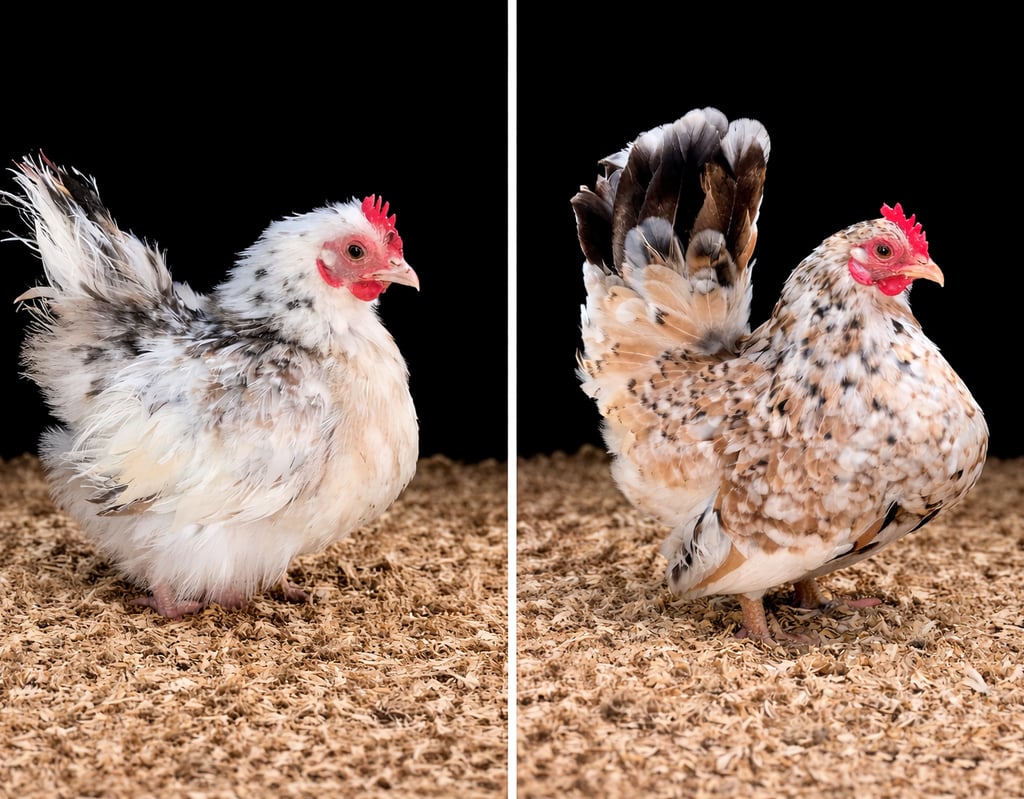
The Malaysian Serama is a remarkable true bantam, widely recognised as the smallest chicken breed in the world. It originated in Malaysia, particularly in the state of Kelantan. The breed was developed in the 1970s by Wee Yean Een, who selectively bred small local bantams to produce an even more compact and refined bird. The name “Serama” is thought to be derived from “Rama,” a reference to Thai royalty, reflecting the breed’s proud and upright stance. Over time, the breed gained popularity internationally, particularly in Europe and the United States, where it is now kept both as a show bird and as a companion animal. These tiny chickens are especially suited to small gardens or even indoor setups due to their extremely compact size and minimal space requirements. They come in a wide variety of colour, but do not 'breed true' meaning that it is hard to breed for a specific colour as you can in Pekins for example. However the diversity is what makes keeping and breeding Serama such fun. You never know what you will get. The colours and shape make them visually striking despite their small stature.
In terms of egg-laying capabilities, Malaysian Seramas are not prolific layers and typically produce around 100 to 200 small eggs per year, which are usually white to lightly tinted. They are generally hardy little birds and have a lifespan of around 5 to 8 years, depending on the quality of care and environmental conditions.
For a comfortable living environment, they require a well-insulated coop and a secure, dry run, particularly in cooler climates such as the north of the UK. When first introduced into the UK they were considered delicate, but since arriving in around 2006 they have adapted to the UK climate and do not require any more protection than any other chicken. Feeding them is simple, as they thrive on a balanced diet of high-quality layer pellets or crumbs, supplemented with greens and occasional treats. Because of their small size, their food consumption is minimal.
Malaysian Seramas are known to be relatively easy to breed, and hens often display broody behaviour, making them attentive mothers. However, their small size means eggs and chicks require extra care once hatched, Being so tiny, the chicks chill easily so are best raised in controlled conditions. They are exceptionally friendly and confident birds, often forming strong bonds with their owners. Their calm and sociable nature makes them ideal companions, particularly for those seeking pet chickens rather than purely productive birds.
Physical Characteristics and Varieties
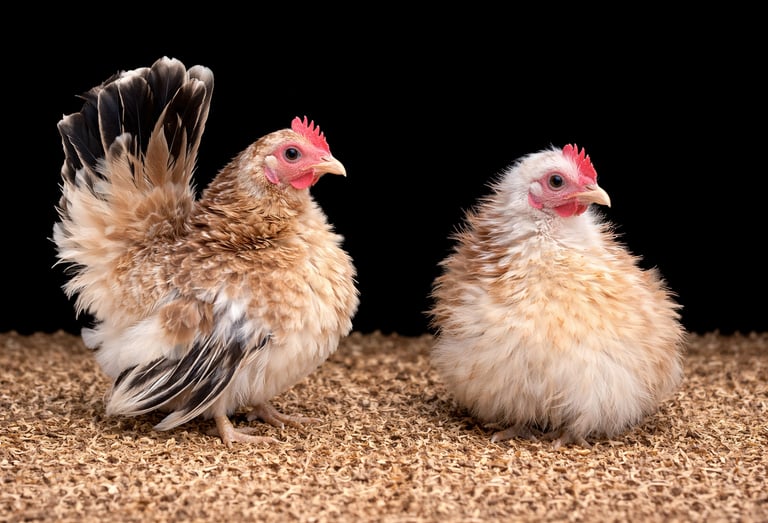
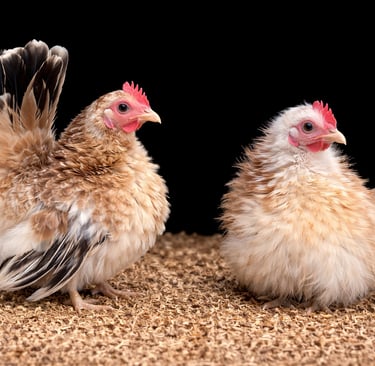
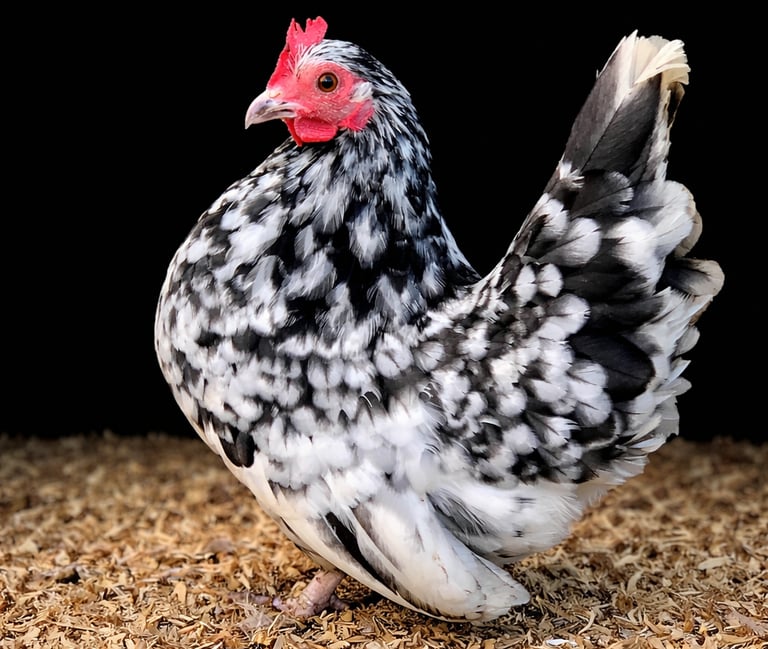
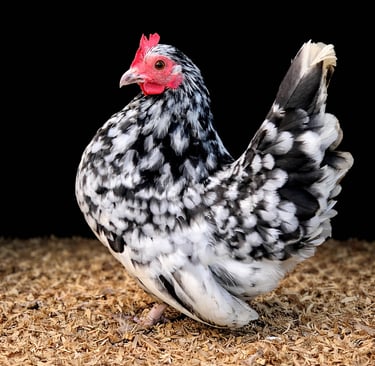
Appearance They are extremely small, upright, and compact birds with a distinctive posture, often standing almost vertically with their chest pushed forward, wings held low, and tail carried high. Their overall appearance is elegant and bold despite their tiny size.
Size Very small, with hens typically weighing around 250g-400g and roosters around 300g-500g.
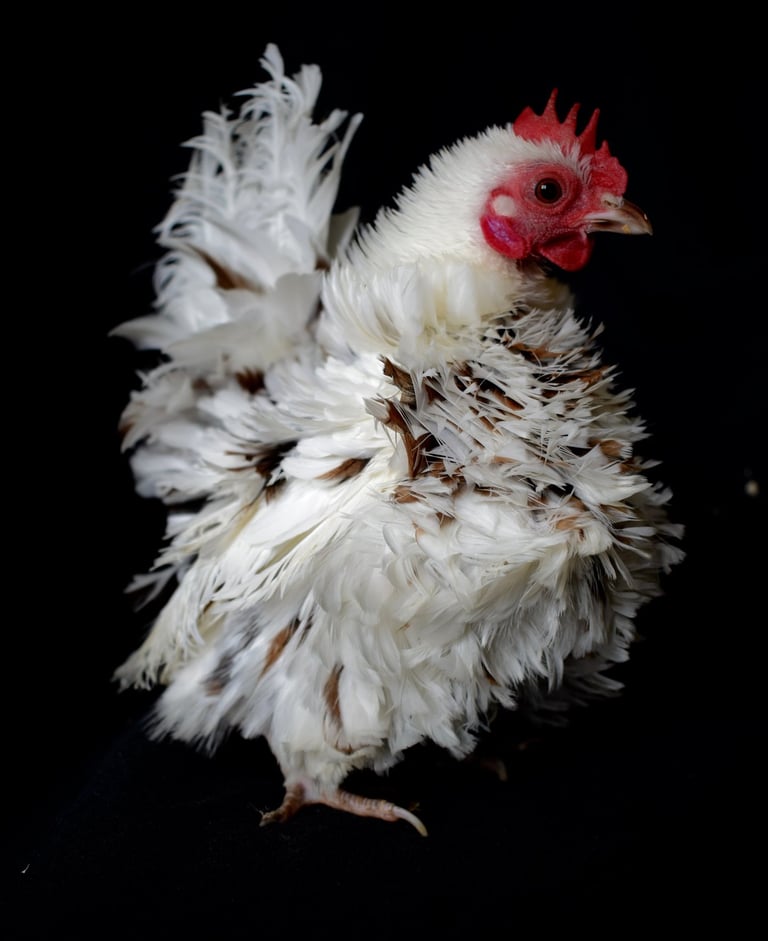
Frizzle A recognised variation is the Frizzle Serama, which has feathers that curl outward, adding to their unique appearance.
Silkied Another variation includes birds with softer, fluffier feathering. Both silkied and frizzed are now accepted in the show world.
Care and Management
Temperament Extremely friendly, confident, and people-oriented, making them excellent pets. They are known for enjoying human interaction and can be quite affectionate.
Housing & Space They require very little space and are ideal for small gardens or indoor keeping. Due to their size they must be protected from predators if free ranging and provided with a warm, dry, and draft-free environment for night time.
Cold & Heat Tolerance They thrive in warm climates but are slightly more sensitive to cold, damp, and wind. Extra care is required in colder regions such as Scotland, especially during winter.
Diet They require a standard poultry diet and benefit from small amounts of greens and protein, with portion sizes adjusted to their small size.
Lifespan With proper care, they typically live between 5-8 years.
Productivity
Eggs They are light layers, producing around 150-200 small eggs per year, usually white or lightly tinted.
Broodiness Hens frequently go broody and are attentive mothers, although care must be taken due to the fragility of eggs and chicks.
Health and Maintenance
Foot Care Their legs are clean meaning unfeathered, which makes maintenance relatively simple, though general cleanliness is still important.
Mites/Lice Regular checks are essential, as their dense body feathering can still harbour parasites.
Suitability
Best for Beginners, families, small spaces, and those looking for highly interactive pet chickens rather than egg production.
Note While generally gentle, roosters can occasionally show territorial behaviour (just like all cockerels) despite their small size.
© 2026. All rights reserved.
Contact
07976 531152
info@parksidepoultry.uk
Useful Links
Address
4 Croft Road, Aldershot, Hampshire. GU11 3HR