Visits by appointment only - please call 07976 531152 to arrange.

Coturnix Quail as Pets
Small but Mighty
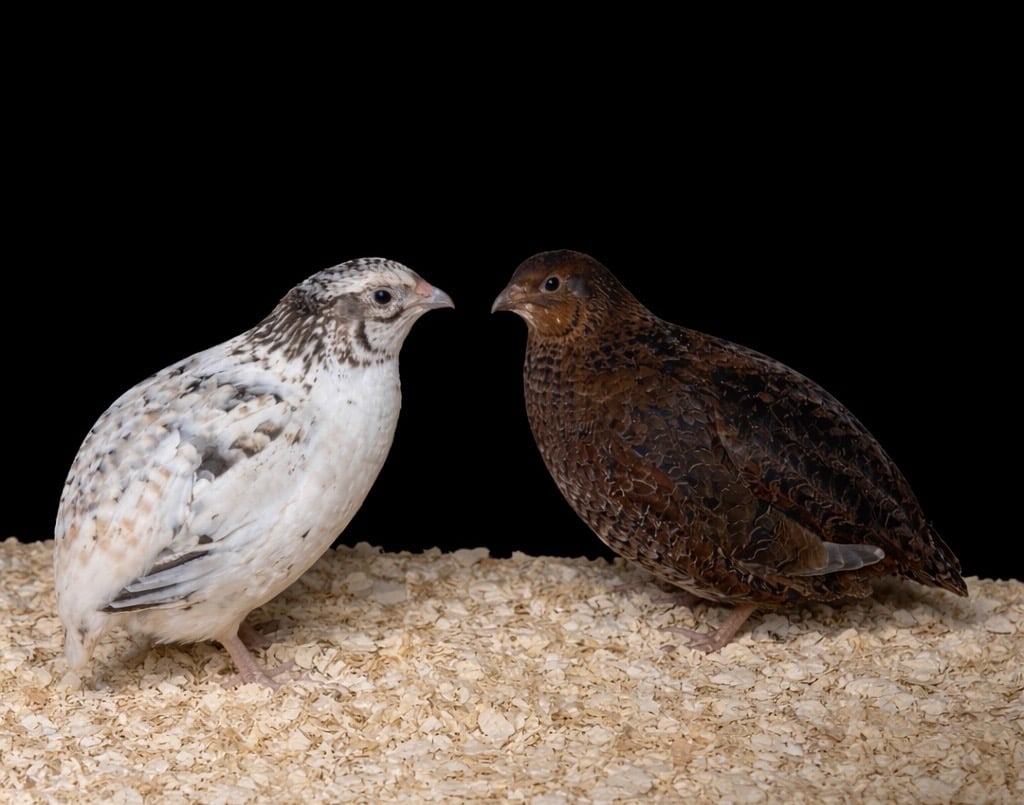
History of the Coturnix or Japanese Quail.
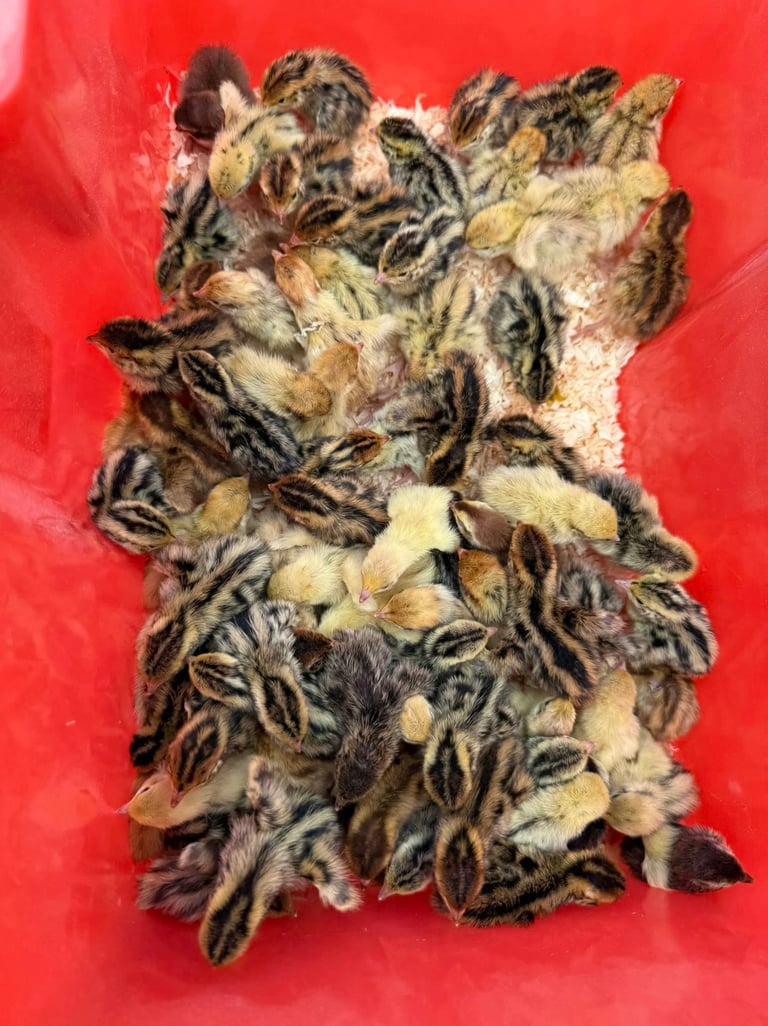
The Coturnix quail, commonly known as the Japanese quail, is a small, domesticated game bird that originated in Japan, with its wild ancestors found across parts of Asia and Europe. Scientifically known as Coturnix japonica, this species has been bred in captivity for centuries, initially for song and later for egg and meat production. Over time, selective breeding has produced a range of colour varieties and improved productivity. Today, Coturnix quail are popular worldwide due to their rapid growth, high egg production, and suitability for small-scale and urban setups. Their compact size and ability to thrive in confined spaces make them ideal for those with limited room.
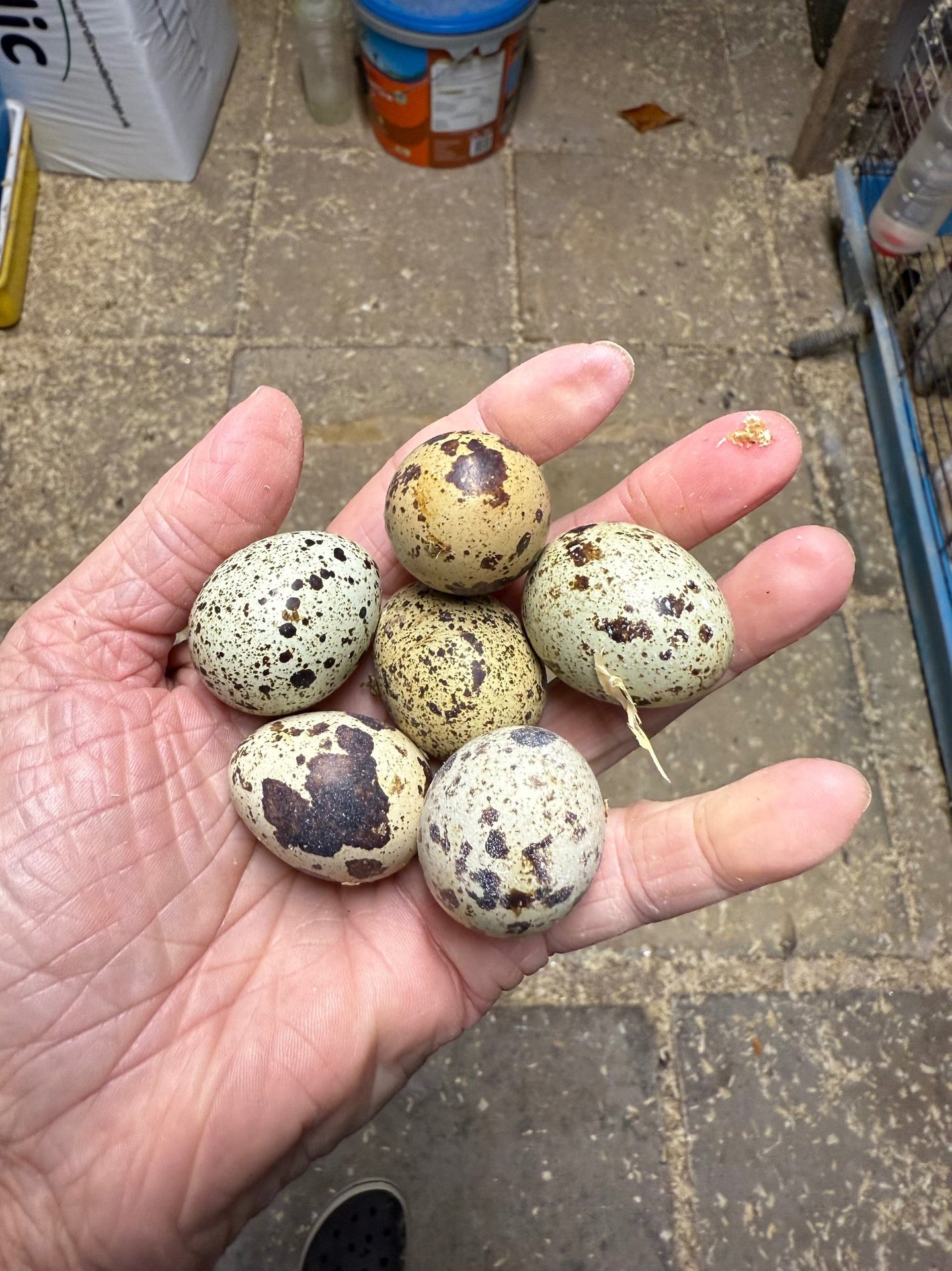
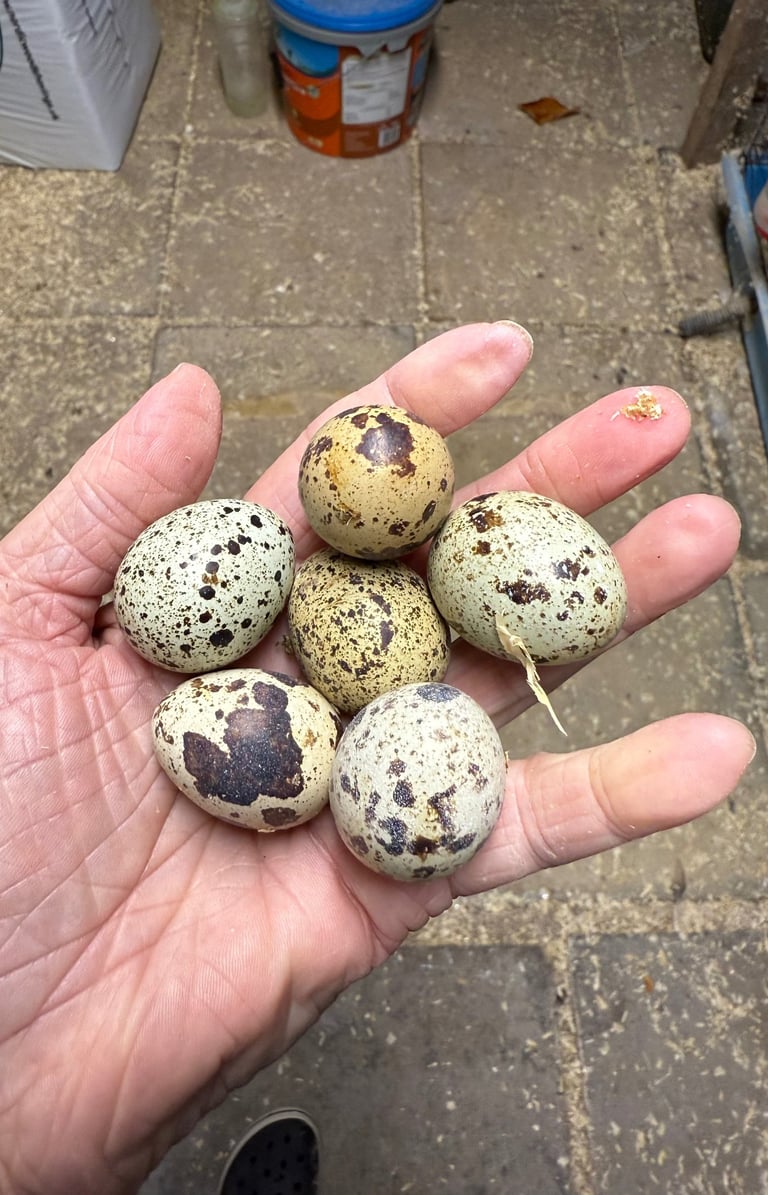
In terms of egg-laying capabilities, Coturnix quail are highly productive and can lay around 250 to 300 small eggs per year. The eggs are typically cream-coloured with dark speckles and are considered a delicacy. These birds mature quickly and can begin laying as early as 6 to 8 weeks of age. They generally have a shorter lifespan than chickens, averaging around 2 to 4 years, although this can vary depending on care.
For a comfortable living environment, Coturnix quail require a secure enclosure rather than a traditional coop, as they are ground-dwelling birds and do not roost like chickens. A well-ventilated, predator-proof cage or aviary with adequate floor space is essential. Feeding them is straightforward, as they require a high-protein game bird or quail feed to support their rapid growth and egg production. Fresh water should always be available, and care should be taken to use appropriately sized feeders and drinkers.
Coturnix quail are generally easy to breed, although unlike many chickens, they rarely go broody, meaning eggs are typically incubated artificially. They are relatively calm birds but are less interactive than chickens and prefer minimal handling. While they can become accustomed to human presence, they are naturally more skittish and are usually kept for productivity rather than companionship.
Physical Characteristics and Varieties
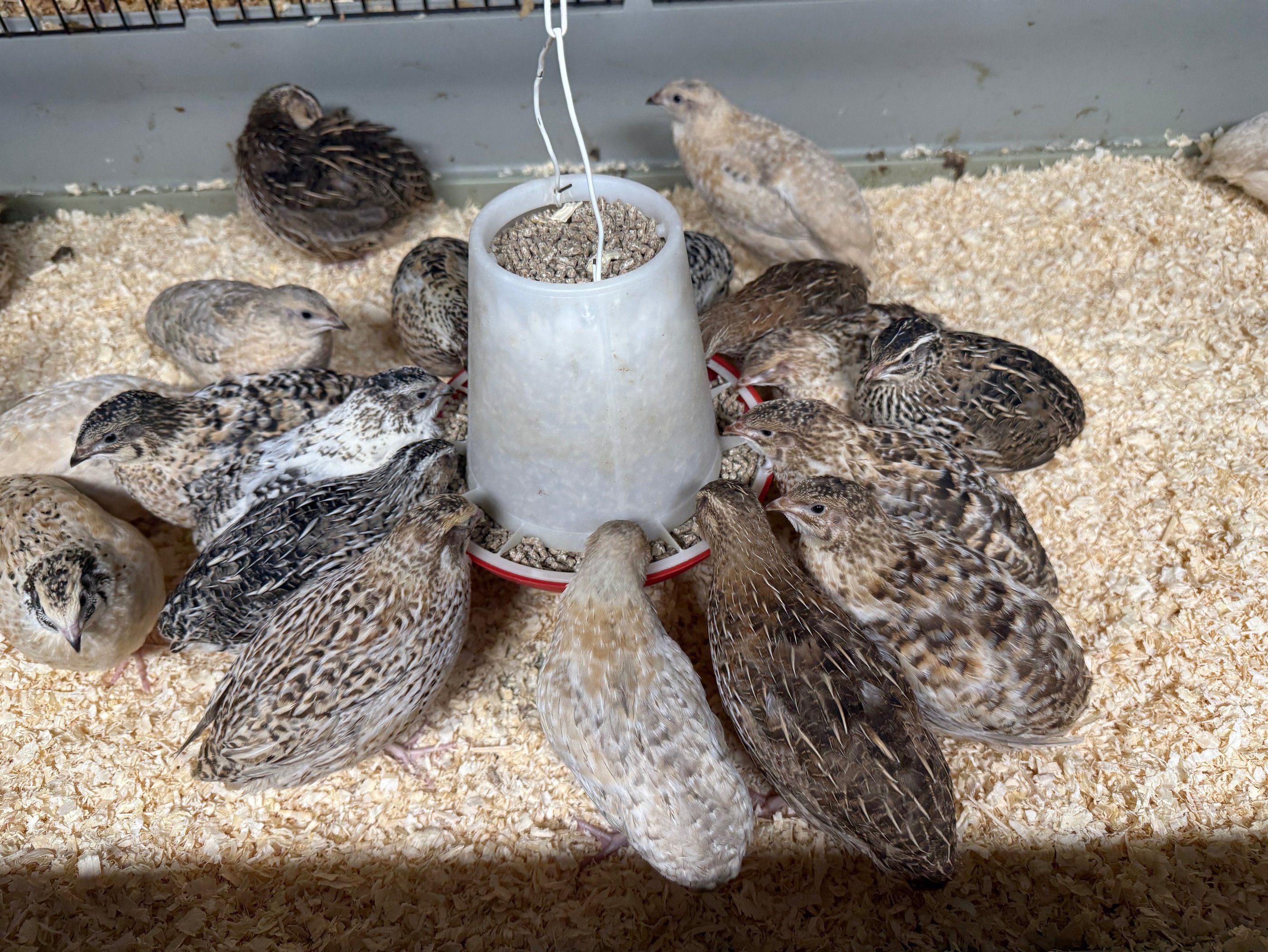
Appearance They are small, rounded birds with short tails and a compact body, typically held horizontally. Their plumage is soft and comes in a wide range of colours and patterns.
They are small birds with adults typically weighing around 120g-300g depending on strain and purpose. You can also get a Jumbo variety who can weigh up to 400g.
Care and Management
Temperament Generally friendly and docile but more flighty than chickens, preferring limited handling and quiet environments.
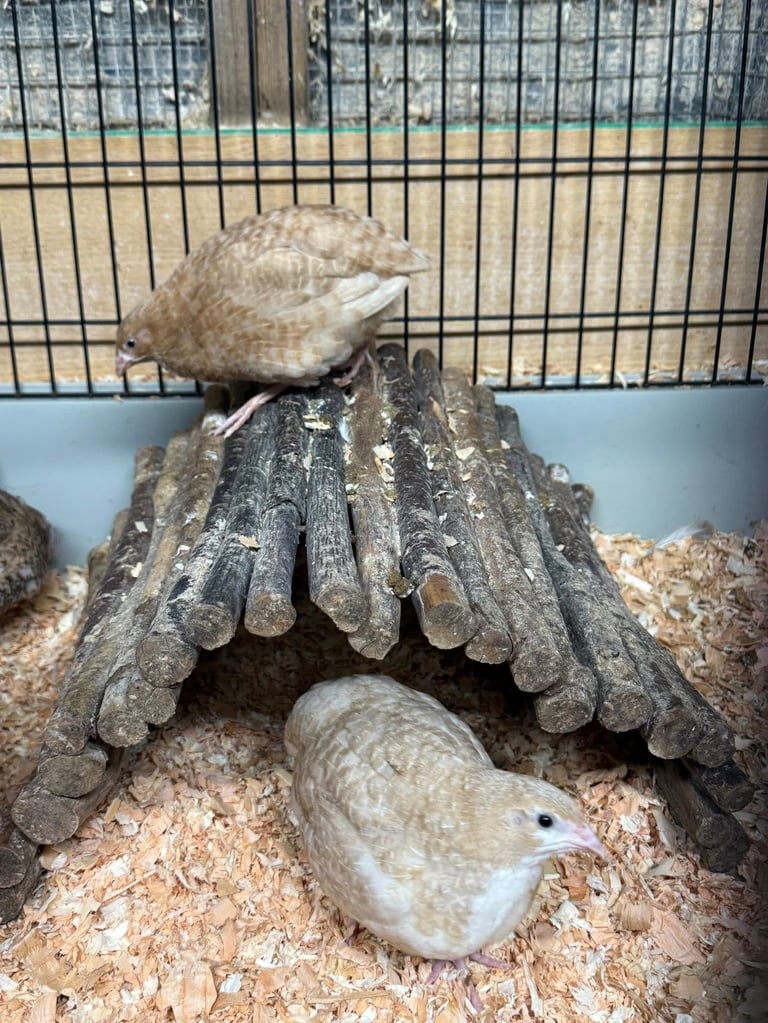
Housing & Space They require ground-based enclosures with sufficient space to move around. Because they can startle and fly upwards suddenly, soft or low ceilings are recommended to prevent injury. Quail love hidey holes and plant pots to lay in, and also Conifer branches that they can hide behind. The more interesting things you put in their enclosure the happier they will be.
Cold & Heat Tolerance They are fairly hardy but require protection from extreme cold, damp, and excessive heat. Adequate ventilation and shelter are essential.
Diet They require a high-protein diet specifically formulated for game birds or quail, particularly during laying periods, although they can do well on chicken layers pellets with a little added protein in the form of meal worms etc.
Lifespan Typically 2-4 years with proper care.
Productivity Highly productive, laying around 250-300 eggs per year, often beginning at a very young age.
Broodiness Rarely go broody, so incubation is usually required for breeding.
Health and Maintenance
Foot Care As ground birds, they require clean, dry flooring to prevent foot issues. A lot of people keep quail on wire flooring but I personally feel this is cruel and not beneficial to the quails wellbeing.
Suitability
Best for Beginners interested in egg production, small-scale keepers, and those with limited space.
Note They are less suited as pets compared to chickens due to their more nervous nature, but they excel in productivity and efficiency.
© 2026. All rights reserved.
Contact
07976 531152
info@parksidepoultry.uk
Useful Links
Address
4 Croft Road, Aldershot, Hampshire. GU11 3HR