Visits by appointment only - please call 07976 531152 to arrange.

Caring for Newly Hatched Chicks
Advice I always print and give to my customers.
HATCHING AND REARING
Sarah Barratt
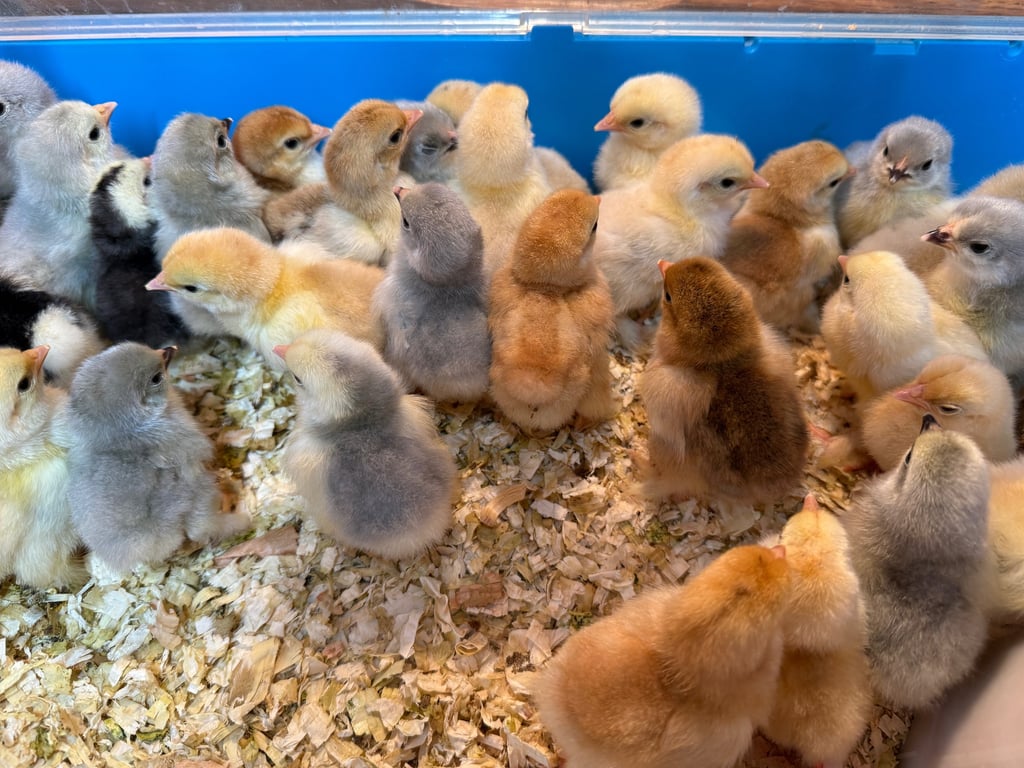
Care for Newly Hatched Chicks
Set up a brooding area. When raising just a few chicks (30 or less) use a large box with walls at least 18-inches high and place the box in a safe area away from drafts and household pets. Use a screen or a towel to partly cover the box. Make sure the lamp cannot fall into the brooder and start a fire or burn the chicks. DO NOT KEEP YOUR CHICKS IN THE KITCHEN The particular danger is overheated PTFE/non-stick cookware and appliances, which can release fumes that are extremely toxic to birds..
Coccidiosis and feeding
Coccidiosis is the biggest risk to your new chicks. Coccidia are extremely common wherever poultry are kept. Problems occur when young or susceptible chicks ingest enough infective oocysts for the parasite to multiply rapidly in the intestinal tract. Keeping bedding dry, feeders and drinkers clean and avoiding overcrowding all help reduce the risk. Young chicks can succumb if they are in any way unhappy, too hot, too cold, dirty/damp conditions or stressed. If your chicks start to look droopy, pale, hunched, less active or there appears to be any blood in the poo then it is likely that this is the case. Time is now of the essence as Coccidiosis can kill in hours if not diagnosed and treated. By the time the hens reach six months old they will have developed an immunity to Cocci ….
Feeding a medicated feed provides a buffer (not a cure) to the effects of coccidiosis and I always recommend using this type of feed. You can tell if it is medicated as it will say ACS or MEDICATED on the label. To go from medicated to unmediated feed can be detrimental to the chicks health as it removes the buffer instantly, leaving them more susceptible to the effects of the coccidia.
Keeping Chicks Warm
Chicks need to be kept in a warm place until they are fully feathered. The temperature at the bottom of the brooding area should be 95-100 degrees for the first two weeks and then reduced 5 degrees each week until chicks are a month old. Use a brooder lamp clipped over one side of the brooding area so the chicks can choose whether to be under the light or not. If chicks are crowded together directly under the heat source, then they are cold. If they are around the edges of the brooding area, then they are too hot. Adjust the height of the lamp accordingly and give them enough room to move in and out of the light to regulate their body temperatures. Inside the house/room temperature is NOT sufficient for chicks under three weeks, it’s simply not warm enough.
Bedding for Chicks
Provide bedding to catch and absorb chick droppings and change this often. Line the floor of the box with sheets of newspaper and then cover it with pine shavings. Once lightly soiled just roll up the paper, pine shavings and all, and throw it away. If using only newspaper, make sure to cover with bedding so the surface won't be as slippery for the chicks. Without firm footing their legs will not develop correctly, making them splay-legged.
Food and Water for Chicks
Set out water and chick starter feed in separate containers. Keep food and water clean and free of droppings. A chick drinker or rabbit bottle is by far the best way to give chicks water but to begin with it’s best to offer chicks both a bottle and a drinker. Older growers should be fine with just the bottle as that is all they will have here. Saucers or other make-shift containers spill easily making the brooder area wet and unsanitary leading to coccidiosis. Never let the chicks go without food or water. For feed, start chicks on a medicated (acs) starter ration. At 6-8 weeks old, switch chicks to a growers ration. Change slowly so that the chicks don’t starve when offered a pellet as opposed to a crumb. I always have stock of both of these and you are welcome to purchase further supplies direct from me.
Chick enrichment
Older chicks love to roost when they're resting. You may provide roosting perches so chicks have a place to perch a few inches off the ground to keep them from roosting on the waterer and feeder. As the chicks start to feather, you will be able to pop them outside for a short while if it is warm enough, but choose a draft free area. Keep an eye on them and provide a tray of sand so they can dust. As you work with the chicks, remember that slow movements are less apt to frighten them.
Pasty butt is when the vent of a chick (anus) becomes clogged up with hard (or 'pasty') stools. the stools stick to the chick's downy feathers and don't come off by themselves.
The hard poop acts like a plug and prevents other waste products getting out of the body, so they build up inside the chick's still delicate digestive system fairly quickly. If not treated, apart from the risk of pain and bowel rupture, the waste will send poison through the system and the chick will die. It's as simple as that.
Who gets it?
Normally very young chicks are particularly susceptible. No matter how distasteful it may seem to you, you need to clean the chick up yourself - a baby chick isn't capable of doing this alone! Getting chilled or overheated is a major cause. Dont rush to introduce your new chicks to the garden, however warm it feels to you.
You need to check your chicks regularly - pasty butt is most common in the first week or two of a chick's life as it becomes used to its surroundings and food.
Some symptoms you might see in affected chicks are :
• Lethargy - chick seems to be weaker than the others
• No/slow growth
• Not eating or drinking
• Not sleeping
• Protruding vent
but it's really better to catch it before it gets to this stage.
The umbilical cord - exactly as in a human baby - comes from the belly button. The cord itself will look like a piece of dark coloured cotton. In all honesty it is rare to see one but I have included the information on the off chance that your chick still has theirs. If you see that in a chick, don't touch it - you risk (not to put too fine a point on it) pulling the chick's intestines out. It will drop off by itself in a day or two. You can always snip the end off a few mm from the body if you are worried.
Food Chicks are cute. Inevitably, you'll want to give them treats. But chicks who are a day or two old can't process anything other than a good quality chick starter feed. You can start adding treats such as sweetcorn, peas, green leafy veg and dandelions etc when around a month old. Add slowly to the diet to avoid upsetting the stomach.
Smelly poo!!! All chicks and chickens do a smelly, mustard coloured poo around every 10 poo’s!! This is nothing to worry about…. you do not however want to see blood. This would indicate coccidiosis and needs to be treated urgently.
© 2026. All rights reserved.
Contact
07976 531152
info@parksidepoultry.uk
Useful Links
Address
4 Croft Road, Aldershot, Hampshire. GU11 3HR