Visits by appointment only - please call 07976 531152 to arrange.
Quail Farming: Start Your Flock Today
How many Coturnix quail do you need for eggs, fertile hatching eggs or meat? A practical beginner’s guide to flock size, males, laying and care.
HATCHING AND REARING
Sarah Barratt
Keeping Coturnix Quail for Eggs and Meat – How Many Do You Need?
One of the questions I get asked quite a lot is how many quail you actually need to keep.
The answer really depends on what you want them for.
Some people just want a few females for eggs. Others want to hatch their own chicks, and some people are interested in keeping them for both eggs and meat.
The good thing about Coturnix quail is that they are small, they grow very quickly, and you don’t need a huge amount of space to keep a useful number of them.
If You Just Want Eggs
If you are keeping quail mainly for eggs, you really don’t need that many.
A small group of around six to ten females can give you a really good supply of eggs when they are laying well.
Quail eggs are obviously much smaller than chicken eggs, so you normally use several at a time, but even a small group can soon produce more than you expect.
If you only want eating eggs, you do not need a male.
In fact, keeping just females is often easier because you don’t have to worry about males chasing the hens or over-mating them.
If You Want Fertile Eggs
If you want to hatch your own quail, then you will need a male.
I normally think around one male to four to six females is a sensible ratio.
You do have to keep an eye on them though.
Some males are much more enthusiastic than others, and if there are too many males, or one is particularly rough, the females can end up with missing feathers or sore heads and backs.
It is really a case of watching your own group and adjusting things if necessary.
Quail Grow Very Quickly
One of the nicest things about Coturnix quail is how quickly everything happens.
The eggs usually hatch at around 17 to 18 days, and the chicks grow incredibly fast.
You can go from a tiny chick to a nearly adult-sized bird in what seems like no time at all.
Females can start laying from around six to eight weeks old, although some will be a bit earlier and some a bit later.
This is one of the reasons quail are such a good choice if you want something productive without waiting months and months.
How Many Do You Need for Meat?
If you are keeping quail for meat, you will obviously need more birds.
Quail are much smaller than chickens, so one bird does not go very far.
If you only want the occasional meal, you could manage with quite a small breeding group and hatch a few batches through the year.
If you want to eat quail regularly, you would need to hatch more often.
Jumbo Coturnix are usually the better choice if meat is one of your main reasons for keeping them because they grow larger than standard Coturnix.
Standard Coturnix are still perfectly useful birds for both eggs and meat.
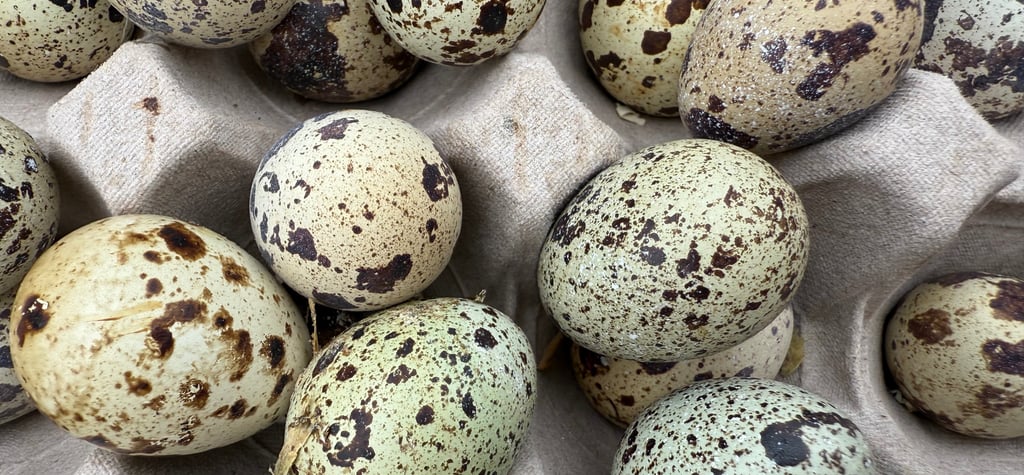
Celadon quail are mainly kept because people love the beautiful blue eggs, although they are still Coturnix and are kept in much the same way.
You Don’t Need a Huge Garden
Quail don’t need acres of space.
They are one of the easiest poultry types to keep if you have a smaller garden.
That doesn’t mean they should be packed in tightly though.
They still need enough room to move around properly, dust bathe, eat and drink without being bullied, and get away from each other if they want to.
Their enclosure also needs to be secure.
Foxes and rats are probably the biggest things I would worry about, but cats and other predators can also be a problem.
Quail can also shoot straight upwards when frightened, so you need to think about the roof of the enclosure as well.
They are very good at escaping when you least expect it.
They Are Happier in Groups
Quail are social birds and I would never really suggest keeping one on its own.
If you are completely new to quail, I think around six females is a nice starting point.
It gives you enough birds to enjoy them and get a useful number of eggs without suddenly having a huge flock to look after.
You can always add more later.
Most people do!
What About Winter?
One thing people sometimes forget is that quail egg production can slow down in winter.
The shorter daylight hours can make a big difference.
Some people use artificial lighting to keep them laying for longer, but I am quite happy to let mine have a natural break.
So if you are working out how many hens you need, don’t assume each one is going to lay an egg every day all year round.
They won’t.
Which Type Should You Choose?
If you are just starting out, standard Coturnix are a very good choice.
They are easy to keep, grow quickly and lay well.
If you want bigger birds, then Jumbo Coturnix may suit you better.
If you like the idea of blue eggs, then Celadon quail are lovely, but it is worth remembering that the blue egg gene has to be carried correctly, so not every bird from mixed breeding will necessarily produce blue eggs.
In a Nutshell
If you mainly want eggs, start with six to ten females.
If you want fertile eggs as well, add a male at around one male to four to six females.
If you want meat regularly, you will need a bigger breeding group and will need to hatch batches regularly.
You really don’t need to start with dozens.
Start small, see how you get on, and work out how many eggs you actually use.
Quail are very easy to get carried away with because they hatch quickly, grow quickly and mature quickly.
You can start with six and somehow end up with sixty before you know it!
At Parkside Poultry, we keep and breed several types of Coturnix quail, including standard, Jumbo and Celadon, with fertile hatching eggs available depending on what is laying at the time.
© 2026. All rights reserved.
Contact
07976 531152
info@parksidepoultry.uk
Useful Links
Address
4 Croft Road, Aldershot, Hampshire. GU11 3HR