Visits by appointment only - please call 07976 531152 to arrange.
Celadon Quail: Blue Eggs & Unique History
Discover the fascinating history of the celadon quail, known for its beautiful blue eggs. Learn how it differs from the Japanese quail, along with essential tips on housing, feeding, and general care.
GENETICS
Sarah Barratt
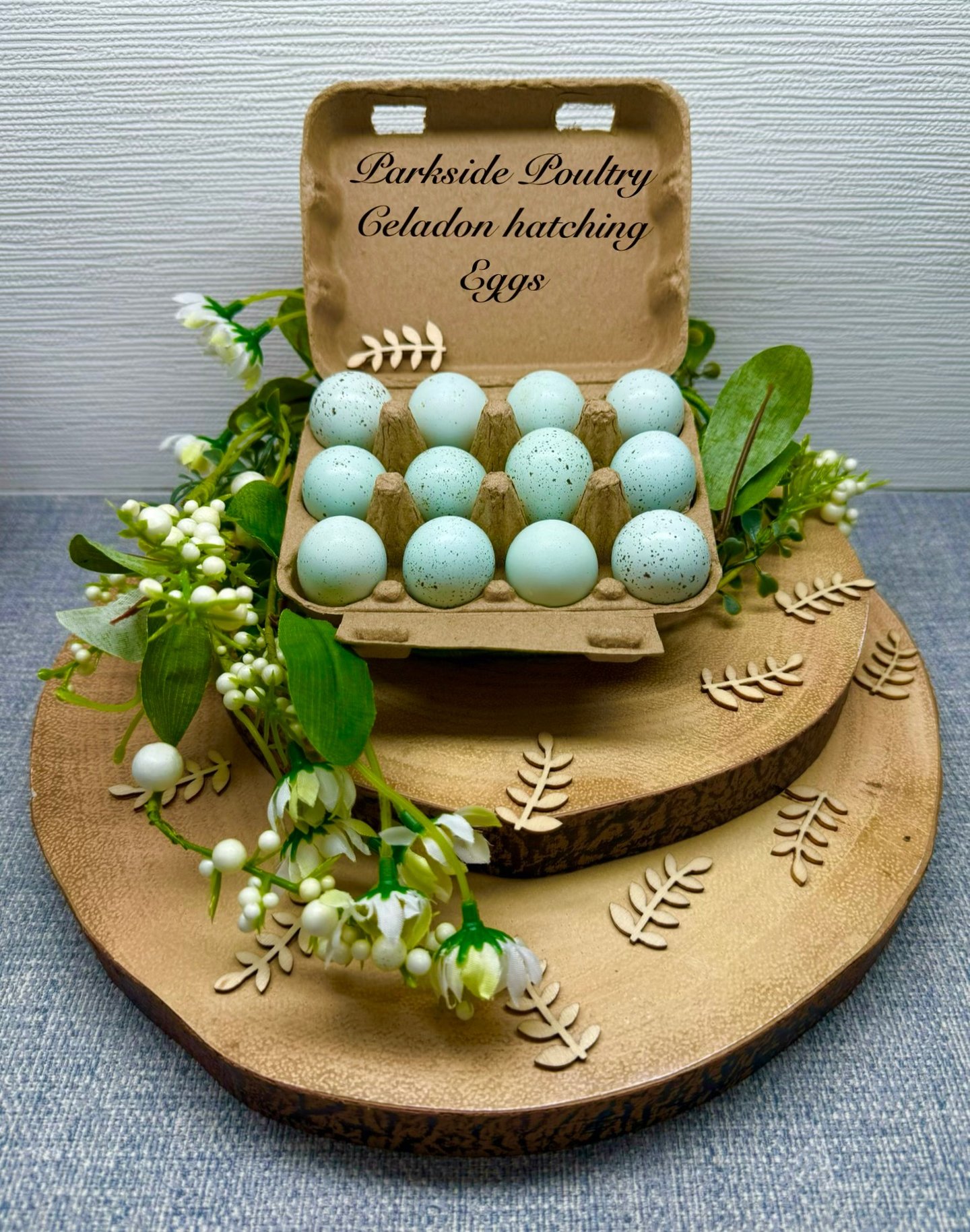
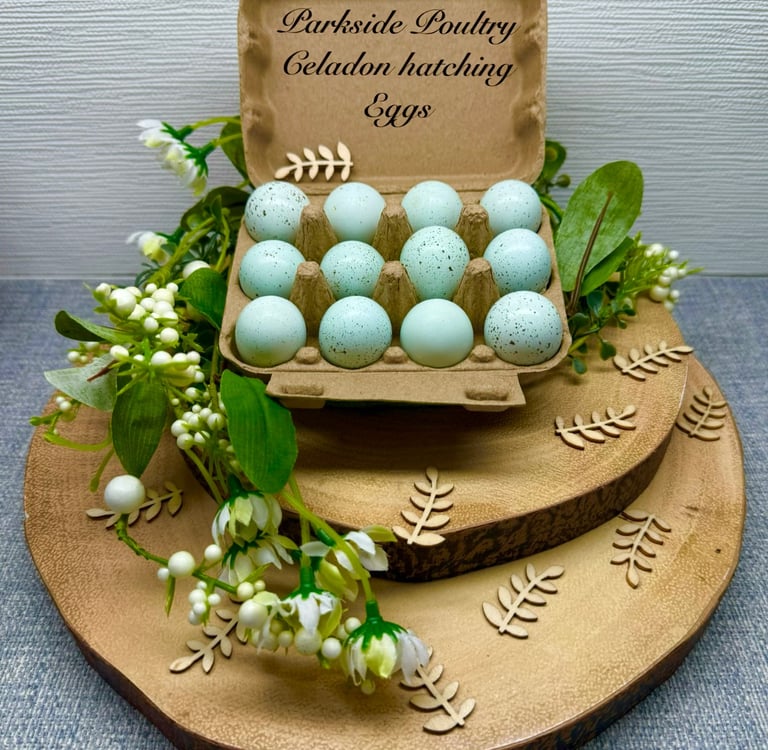
Celadon quail have become one of the most intriguing developments in small-scale poultry keeping, not because they are a separate breed, but because of a single, fascinating genetic trait. These birds are standard Coturnix japonica, commonly known as Japanese quail, yet they carry a recessive gene that transforms the colour of their eggs into soft shades of blue and green. This subtle but striking difference has elevated them from ordinary utility birds into something that feels rare and almost ornamental, while still retaining all the practicality and resilience of traditional Coturnix.
The story of the celadon trait begins in Japan, where researchers first identified the gene in 1993. The name “celadon” itself is borrowed from the pale blue-green glaze found on traditional East Asian ceramics, an apt comparison for the delicate colouring of the eggs. From those early laboratory observations, the gene gradually made its way into breeding programs around the world, eventually becoming highly sought after among hobbyists and small breeders. Today, while celadon quail can be found globally, much of the structured breeding work has been refined through European lines, often referred to simply as “EU lines.” These are not officially recognised categories, but rather a shorthand used by breeders to indicate stock that has been selectively bred in Europe for reliable blue egg production, fertility, and consistency.
One of the most important things to understand about celadon quail is that the trait has nothing to do with the bird’s feather colour. A celadon quail can look like any other Coturnix, appearing in a wide range of plumage patterns such as pharaoh, tuxedo, silver, or white. There is no visual marker that distinguishes a celadon bird from a non-celadon one. The only true indicator is the egg it lays. If the egg is blue, the bird is celadon; if it is brown or cream with speckles, it is not, regardless of its ancestry.
The eggs themselves are what capture attention. Unlike the typical Coturnix egg, which is usually beige or tan with dark speckling, celadon eggs range from pale sky blue to deeper teal tones. Some may still carry speckles, but many are a clean, uniform colour that stands out immediately. What makes these eggs particularly interesting is that the colour is not merely applied to the outer surface. Instead, the pigment permeates the shell, meaning that even the inside can show a faint bluish tint. This is due to the presence of biliverdin, a natural pigment deposited during the formation of the eggshell in the hen’s oviduct. The same pigment is responsible for blue eggs in other bird species, but in celadon quail it produces a uniquely soft and varied palette.
Genetically, the celadon trait follows a straightforward but strict pattern. It is autosomal recessive, which means a bird must inherit two copies of the gene in order to lay blue eggs. Birds with only one copy will appear completely normal and lay standard coloured eggs, though they carry the gene and can pass it on to their offspring. This creates a breeding dynamic that is simple in theory but requires careful management in practice. Two true celadon birds will reliably produce offspring that all lay blue eggs, while pairing a celadon bird with a non-celadon will result in no blue eggs at all in the next generation, only hidden carriers. For breeders, this makes record keeping and controlled pairings essential if the goal is to maintain or expand a line of true celadon birds.
Despite the genetic complexity behind the eggs, the birds themselves require no special care compared to standard Coturnix. They thrive on the same high-protein feed, adapt to the same housing systems, and follow the same rapid growth and laying cycles that make Japanese quail so popular. Incubation periods remain unchanged at around seventeen to eighteen days, and their overall hardiness is unaffected by the celadon gene. The main difference lies not in how they are kept, but in how they are bred. Maintaining a consistent celadon line means avoiding accidental crossings with non-celadon birds and ensuring that breeding stock is properly identified and tested.
The term “EU lines” often appears in listings and discussions, and while it may sound official, it is best understood as a breeder’s label rather than a formal classification. It generally refers to birds that originate from European breeding programs where the celadon trait has been stabilised through selective breeding. These lines are often marketed as more reliable, with stronger expression of the blue egg trait and better overall productivity. However, as with any unregulated term, its meaning depends largely on the integrity and practices of the breeder using it.
For those looking to sell celadon eggs, their uniqueness provides a natural advantage. The visual appeal of blue eggs immediately sets them apart in a crowded market, but successful advertising goes beyond appearance. Buyers are increasingly informed and tend to look for reassurance that the eggs come from true celadon stock. Clear communication about parent birds, breeding practices, and expected hatch outcomes can make a significant difference. Photographs play an important role as well, particularly images that show the range of egg colours and the quality of the breeding birds.
Ultimately, celadon quail represent a blend of science, aesthetics, and practical poultry keeping. They are not more difficult to raise than standard Japanese quail, yet they offer something visually distinctive and genetically intriguing. Whether kept for personal enjoyment or as part of a small breeding enterprise, they provide an opportunity to engage more deeply with the principles of inheritance while producing something that stands out both in the nest box and in the marketplace.
© 2026. All rights reserved.
Contact
07976 531152
info@parksidepoultry.uk
Useful Links
Address
4 Croft Road, Aldershot, Hampshire. GU11 3HR