Visits by appointment only - please call 07976 531152 to arrange.
Why and When Do Chickens Moult?
Discover why chickens moult, when it happens, and effective ways to help your flock through the moult process quickly. Ensure your chickens remain healthy and comfortable during this natural phase.
HEALTH AND WELFARE
Sarah Barratt
Moulting
Feathers are a chicken’s lifeline. They regulate temperature, protect the skin, enable flight in short bursts, and even play a role in social signalling within the flock. Yet, despite how essential they are, every chicken periodically sheds them in a process known as moulting. For many keepers, especially those new to poultry, this phase can be surprising, even alarming. Birds that were once sleek and productive suddenly look scruffy, withdrawn, and stop laying eggs altogether. Understanding what is happening beneath the surface reveals that moulting is not a setback, but a necessary and remarkably demanding biological reset.
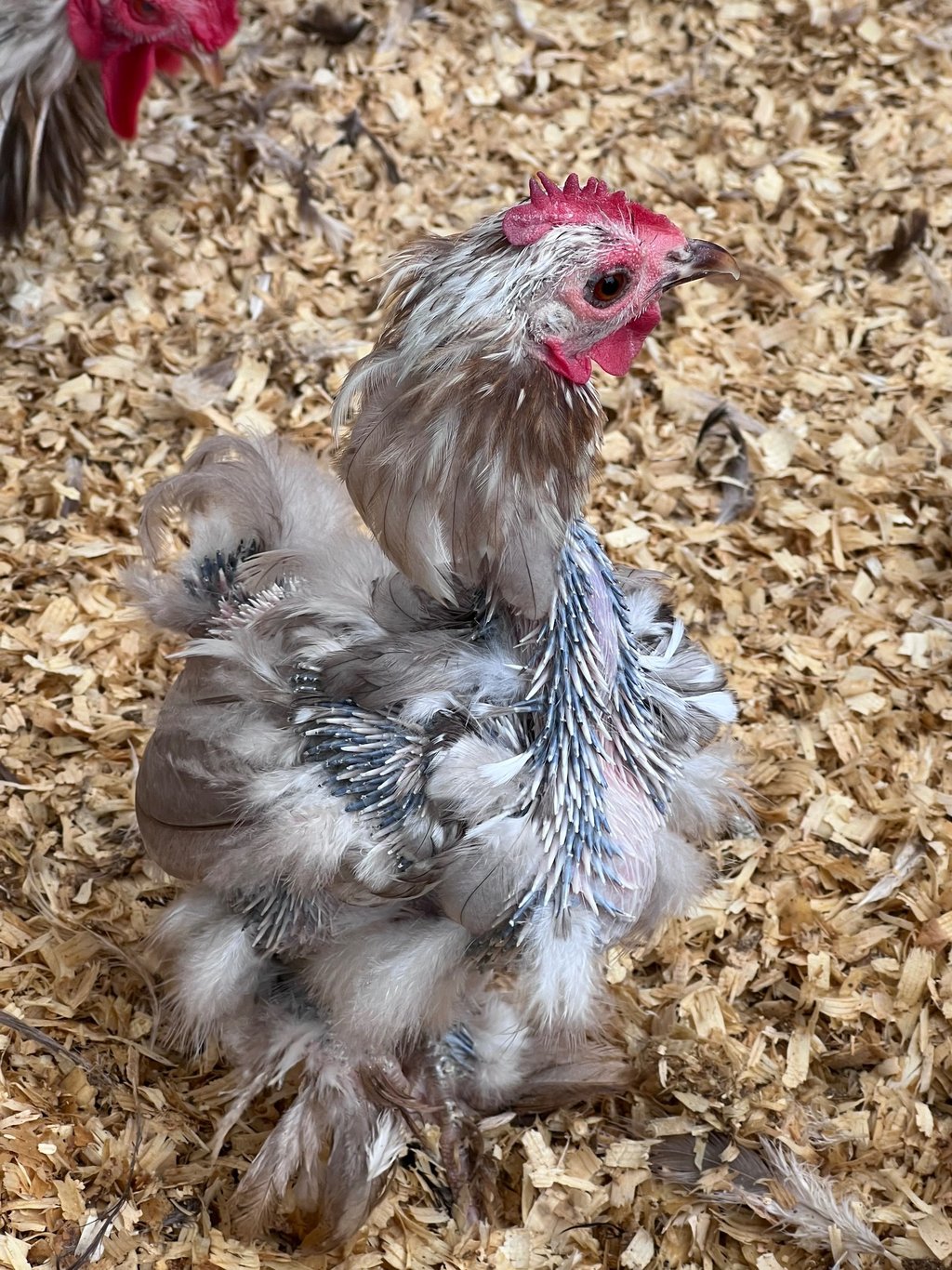
Moulting is the natural process by which chickens shed old, damaged feathers and grow an entirely new set. Feathers are made primarily of keratin, a protein also found in hair and nails, and over time they become worn, brittle, and less effective at insulation. Chickens cannot simply repair feathers; they must replace them entirely. This means that, feather by feather, the bird sheds and regrows across its body. The pattern can vary. Some chickens lose feathers gradually and barely look different (Serama shouldn't go completely bald as they shed very slowly over a long period of time), while others seem to drop them all at once, leaving bare patches that make them appear far more vulnerable than they actually are.
What many people notice most during this time is the sudden drop in egg production. This is not a coincidence or a sign that something is wrong. It is a direct consequence of how the chicken’s body allocates its resources. Egg production is one of the most nutritionally demanding processes in a hen’s life, requiring substantial amounts of protein, calcium, and energy. Feather regrowth, however, is equally demanding in terms of protein. Because a chicken cannot efficiently support both processes at once, its body prioritises feather renewal. In simple terms, a hen cannot lay eggs and grow a full new coat of feathers simultaneously because both processes compete for the same limited pool of nutrients, especially protein. The body makes a sensible choice: survival first, productivity later.
Timing is another aspect that often puzzles chicken keepers. Moulting tends to occur as daylight hours shorten, typically in late summer or autumn. This is triggered by hormonal changes linked to decreasing day length. From an evolutionary perspective, this timing ensures that birds replace their worn-out feathers before winter sets in. Fresh feathers provide superior insulation, helping chickens conserve heat during colder months. Although it can feel inconvenient that birds appear at their most bedraggled just as temperatures begin to drop, the process is actually well-timed. By the time winter truly bites, most chickens will have regrown enough plumage to stay warm.
That said, the moulting period can still be physically stressful. Chickens may become quieter, less social, and more sensitive to handling, particularly when new feathers, known as pin feathers, begin to emerge. These are rich in blood supply while they are growing and can be quite tender. A moulting chicken is not just changing its appearance; it is undergoing a significant physiological effort that can leave it temporarily depleted.
Supporting chickens through this phase is largely about reducing stress and meeting their increased nutritional needs. Since protein is the key building block for feathers, offering a higher-protein diet can make a noticeable difference in how quickly and smoothly the moult progresses. This does not mean abandoning their regular feed, but rather supplementing it thoughtfully. Providing access to protein-rich treats such as live mealworms, sunflower seeds, or specially formulated feeds can help. Ensuring constant access to clean water is equally important, as hydration supports overall metabolic function.
Environmental comfort also plays a role. Chickens that are protected from wind, dampness, and sudden temperature drops will cope better during moulting. While they are regrowing feathers, they have less natural insulation, so a well-maintained coop that is dry and draught-free becomes even more important. Minimising stress from overcrowding, predators, or excessive handling will also allow their bodies to focus on recovery.
Patience is perhaps the most important tool a keeper can have during this time. It can be frustrating to see egg production stop and birds looking worse for wear, but moulting is temporary. Once complete, chickens often return to laying with renewed consistency, and their fresh plumage will be more efficient and vibrant than before. In many ways, moulting is a reset button, allowing the bird to restore itself after months of production and environmental wear.
Seen in this light, the moult is not an inconvenience but a necessary investment in the long-term health of the flock. By understanding why it happens, why egg production pauses, and how to provide the right support, keepers can help their chickens move through this demanding period as smoothly and quickly as possible.
© 2026. All rights reserved.
Contact
07976 531152
info@parksidepoultry.uk
Useful Links
Address
4 Croft Road, Aldershot, Hampshire. GU11 3HR